UX/UI Design
Branding
public data platform
Description
Data.FERC.gov is a public data portal designed to make complex government energy records easy to find, understand, and use for everyone. The portal transforms intimidating regulatory filings into clean, interactive tools, and the platform bridges the gap between massive government databases and everyday citizens, journalists, and researchers.
Role
UX/UI Designer
Timeline
4 Months


PROBLEM STATEMENT
Inaccessibility to Complex Public Data
Critical energy and regulatory information is difficult to navigate due to legacy systems, jargon-heavy filings, and unsearchable PDF documents.
Fragmented Information
Users have to log into multiple legacy systems, databases, and eLibraries just to piece together relevant regulatory information.
Unusable Formats
Researchers and developers have to manually copy data out of locked PDFs or scan legacy file formats to do any actual analysis.
Lack of Clarity
Average citizens trying to find information about local power grids are forced to navigate intimidating, jargon-heavy regulatory filings.
BRANDING
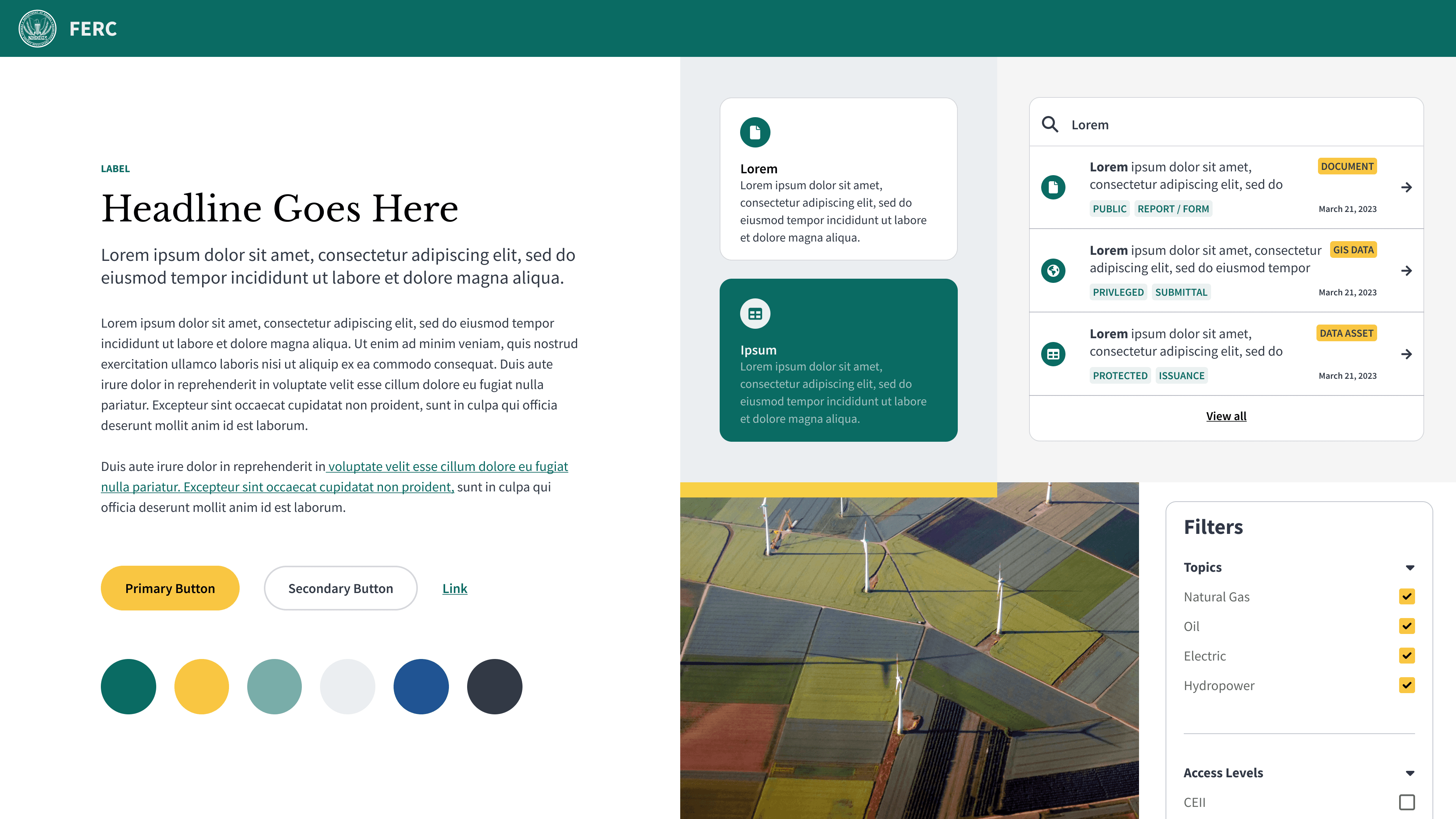
A New Look and Feel
To modernize FERC's legacy system without losing its established branding, we leveraged the core elements of their existing brand identity while introducing a clean, modern user interface. Driven by a collaborative branding workshop, we translated the client’s vision into specialized style tiles that balanced trust with modern digital accessibility.

Current systems
Fragmented Information Across Multiple Systems
Some examples of the systems users use to search through FERC public data are shown below. Users either have to use extensive search filters to drill down basic keywords and work around flawed search engines, or have to log in to find documents that end up unreadable.


THE SOLUTION
A Centralized Data Portal
Data.FERC.gov introduces a centralized digital workspace equipped with an intuitive global search, one-click quick actions, and prominent homepage metrics. The streamlined interface transforms a fragmented data maze into an accessible, self-service platform featuring standardized downloadable files and interactive data tools tailored for both everyday citizens and power users.


